I've written about this before (here and here). The End of Marketing (EOM) of the z10 was announced in July 2011. There were actually two dates : one for hardware upgrades and one for microcode upgrades. Hardware upgrades are already EOM since June 30, 2012. This concerns mainly features like connectivity cards, memory and extra books.
Now, as of June 30, 2013 field install features and conversions that are delivered solely through
a modification to the machine's Licensed Internal Code (LIC) will no longer be possible either. So if you still want to add a specialty engine (within the same book) or you want to do a microcode only upgrade or even downgrade, then I can only say : now is the time. After June 30, this will no longer be possible.
If your company has no intentions of upgrading soon, you might want to take a look at your Capacity on Demand records. If you have e.g. a z10 BC A01 CBU machine with CBU records, then you should check out the expiration dates of these records. Say you have a CBU record that expires on June 30, 2015 with 2 tests left. You can e.g. extend it by three years until June 30, 2018. This automatically includes three extra tests which come at a certain price of course. But it might give you some extra breathing space. Anyway, after that it's finished.
Showing posts with label z10. Show all posts
Showing posts with label z10. Show all posts
Wednesday, April 17, 2013

Friday, April 13, 2012
Reminder : Hardware withdrawal of z10 EC and z10 BC
I blogged about this some time ago over here. But I thought a reminder might be in place as the first End of Marketing date is closing in fast now.
This first End of Marketing date is June 30, 2012. Past that date any upgrades towards a z10 EC or a z10 BC will no longer be possible. Nor will you be able to do any model conversions or hardware MES features. Roughly speaking this means that any upgrade which involves hardware changes will no longer be possible. And, really, that's just a couple of months away.
The second End of Marketing date is June 30, 2013. Until then, any microcode upgrade will still be possible.
As we have seen with the z9, unlike the past, IBM has taken a strict policy of adhering to these End of Marketing dates. So, you must really bear in mind that after the dates I just mentioned, nothing will pass anymore. Not even a microcode downgrade.
At first sight, I think that the practical consequences mainly involve connectivity cards and memory. Up to June 30, 2013 you will still be able to activate that zIIP or an IFL or do a microcode upgrade (as long as you don't need an extra book). But if that involves adding memory, which is not that imaginary, believe me, then you must add it before June 30, 2012. And when you have a New Workload project, but you need additional connectivity, you should put in these cards now or it will be too late.
I know, there's a solution for this : upgrading to the zEnterprise. But we know that not everyone is willing or able to take that step yet. So, just in case you plan to stay just a little bit longer on the z10, have a good look at your future planning in order to see whether you have to take any actions now. The entire announcement is over here.
This first End of Marketing date is June 30, 2012. Past that date any upgrades towards a z10 EC or a z10 BC will no longer be possible. Nor will you be able to do any model conversions or hardware MES features. Roughly speaking this means that any upgrade which involves hardware changes will no longer be possible. And, really, that's just a couple of months away.
The second End of Marketing date is June 30, 2013. Until then, any microcode upgrade will still be possible.
As we have seen with the z9, unlike the past, IBM has taken a strict policy of adhering to these End of Marketing dates. So, you must really bear in mind that after the dates I just mentioned, nothing will pass anymore. Not even a microcode downgrade.
At first sight, I think that the practical consequences mainly involve connectivity cards and memory. Up to June 30, 2013 you will still be able to activate that zIIP or an IFL or do a microcode upgrade (as long as you don't need an extra book). But if that involves adding memory, which is not that imaginary, believe me, then you must add it before June 30, 2012. And when you have a New Workload project, but you need additional connectivity, you should put in these cards now or it will be too late.
I know, there's a solution for this : upgrading to the zEnterprise. But we know that not everyone is willing or able to take that step yet. So, just in case you plan to stay just a little bit longer on the z10, have a good look at your future planning in order to see whether you have to take any actions now. The entire announcement is over here.
Wednesday, July 13, 2011
Hardware withdrawal : z10 EC and z10 BC
Next to the announcement of the z114 there were still some other announcements too. I'll try and cover some of them in the next few days that stand between now and my holiday. First there's the announcement that z10 EC and z10 BC will be withdrawn from marketing : 'Hardware withdrawal: IBM System z10 EC, IBM System z10 BC, and a selected IBM zEnterprise 196 feature - Replacements availabe (ZG11-0116)'.
We've seen the same with the z9 last year and we've also seen that (to my knowledge) for the first time 'withdrawn from marketing' really meant what it said. We haven't done any upgrades after June 30, 2010. This used to be somewhat different in the past.
Now, it happens in two phases. As of June 30, 2012 any upgrades towards a z10 EC or a z10 BC will no longer be possible. Nor will you be able to do any model conversions or hardware MES features. Roughly speaking this means that any upgrade which involves hardware changes will no longer be possible.
"Field install features and conversions that are delivered solely through a modification to the machine's Licensed Internal Code (LIC) will continue to be available until June 30, 2013" meaning that everything which is in the machine will be able to be activated during the next year. E.g. you will be able to add a zIIP to a z10 EC E12 if there are still engines available in that book, you will no longer be able to add a book. After June 30. 2013 nothing will pass any more.
One point of attention : Capacity on Demand offerings will be usable until their expiration date. Something to check when you're planning to use a z10 after June 2013.
We've seen the same with the z9 last year and we've also seen that (to my knowledge) for the first time 'withdrawn from marketing' really meant what it said. We haven't done any upgrades after June 30, 2010. This used to be somewhat different in the past.
Now, it happens in two phases. As of June 30, 2012 any upgrades towards a z10 EC or a z10 BC will no longer be possible. Nor will you be able to do any model conversions or hardware MES features. Roughly speaking this means that any upgrade which involves hardware changes will no longer be possible.
"Field install features and conversions that are delivered solely through a modification to the machine's Licensed Internal Code (LIC) will continue to be available until June 30, 2013" meaning that everything which is in the machine will be able to be activated during the next year. E.g. you will be able to add a zIIP to a z10 EC E12 if there are still engines available in that book, you will no longer be able to add a book. After June 30. 2013 nothing will pass any more.
One point of attention : Capacity on Demand offerings will be usable until their expiration date. Something to check when you're planning to use a z10 after June 2013.
Thursday, October 22, 2009
IBM Announcement : z10 EC GA3 and z10 BC GA2
As I told you in my last post, IBM made a huge amount of announcements last Tuesday. Here's a first one on improvements for the z10 : 'IBM System z10 - Delivering security-rich offerings to protect your data (ZG09-0798)'. In the past, we sometimes saw huge amounts of new features at a new GA, but this time I think it's rather limited. Still, there are some interesting new things. I'll give you three of them. You can explore the rest of them in the announcement itself. It's a.o. about STP Enhancements and z/OS Alerts for
error conditions, HMC/SE Digitally Signed Firmware . . .
If you're interested in specific features, watch out for the availability dates. Most of the features, like the Crypto Express3 card, will be available on November 20, 2009. The Improved Capacity for Planned Events options become available on December 31, 2009 and the OSA multi-port support for CHPID type OSC is scheduled somewhere in the first quarter of 2010.
- Next generation of cryptographic feature with new Crypto-Express3 card
I'm not that familiar with encryption and stuff, so I'm not going to divert on the new functions. But I do want to mention a statement of direction regarding Crypto-Express2 : "The IBM System z10 EC and z10 BC will be the last servers to offer Crypto Express2 (#0863) as a feature, either as part of a new-build order, or carried forward on an upgrade".
- Capacity for Planned Events (CPE) enhancement
As you know 'Capacity for Planned Events' was announced along with the z10 and functions as a kind of equivalent to CBU for planned events. Up to now you could turn on the full available capacity for the machine for a three-day planned period. Now you are able to limit this to the capacity you actually need and this should imply a cost reduction for your CPE activation.
- Configuration flexibility for OSA-ICC cards
"You can now exploit the four ports on an OSA-Express3 1000BASE-T Ethernet feature on the z10 EC and z10 BC, or the two ports on an OSA-Express3-2P 1000BASE-T on a z10 BC, when defining the feature as an Integrated Console Controller (OSA-ICC)" with CHPID type OSC. This means e.g. on a four-port card there are two PCI-E adapters with each two ports. But until now you lost one of the two ports when defining one of them with CHPID type OSC. This limitation has now been removed !
If you're interested in specific features, watch out for the availability dates. Most of the features, like the Crypto Express3 card, will be available on November 20, 2009. The Improved Capacity for Planned Events options become available on December 31, 2009 and the OSA multi-port support for CHPID type OSC is scheduled somewhere in the first quarter of 2010.
Tuesday, July 21, 2009
FICON Express8 for System z10
I have another (Dutch) blog where I give people all kinds of tips on the use of computers. In my last post I advised people to stay away from their computers during their holidays. You can surely live without it and your mail won't be running away. Don't tell those other readers, but I'm not really able to stick to that myself. So, here I am, in the midst of my own holiday, blogging about mainframe announcements. Shame on me !
Well, today IBM announced FICON Express8 cards (ZG09-0480), mind you, only for System z10 EC and System z10 BC. A small summary :
Planned availability
Well, today IBM announced FICON Express8 cards (ZG09-0480), mind you, only for System z10 EC and System z10 BC. A small summary :
- Link data rate of 8 gigabits per second (Gbps) with autonegotiation to 2 or 4 Gbps. So, as mentioned before, no more autonegotiation to 1 Gbps.
- Performance improvements when transferring small blocks of fixed size data (4k blocks)
- With FICON Express8 operating at 8 Gbps, performance improvements for large sequential I/O operations can help reduce the duration of your backup/copy operations
- High Performance FICON for System z supports multitrack operations
Planned availability
- July 31, 2009: New build systems and MES orders
- August 21, 2009: FICON support of System Storage DS8000 series for zHPF multitrack operations
Friday, May 1, 2009
Summary of announcements April 28, 2009
I'm off to the System z Technical Conference in Brussels next week, but I still want to give you an update on the announcements that were made last Tuesday. Most of them are related to the new announcement on Dynamic Infrastructure. You can still find the replay over here. But back to the announcements. Here are the ones that caught my eye for now :
IBM z/VSE Version 4 Release 2 - Additional enhancements available (ZP09-0104)
There are some additional enhancements to z/VSE 4.2 that was announced in August last year (ZP08-350). z/VSE now offers "Encryption Facility for z/VSE V1.2 as an optional, priced feature of VSE Central Functions V8" and some new optional products like IBM Rational COBOL Runtime for z/VSE V7.5 and IBM WebSphere MQ for z/VSE V3.0.
Getting Started Sub-capacity Pricing enhanced for select IBM WebSphere z/OS IPLA programs, making it easier than ever to start new projects on z/OS (ZP09-0193)
This is an improvement to the pricing mechanism that was already announced last year although I had not seen much of it since. Where you only had some profit when you did not pass the 10% utilization of the LPARs MSUs, this is raised to 50%. I'll come back later with more details for this one.
Tivoli Storage Productivity Center V4.1 comes with two announcements. As you can see TPC (Totalstorage Productivity Center) is succeeded by TSPC (Tivoli Storage Productivity Center). The first one is for TSPC (ZP09-0077) itself and the other is for TSPC for Replication (ZP09-0079) which is now again incorporated in the TSPC suite.
CICS Transaction Server for z/OS 4.1 (ZP09-0161) is now officially announced. The Beta Program is still open and it can be used until CICS TS comes available on June 26, 2009.
Last but not least, there are some enhancements on the z10 EC and the z10 BC : 'IBM System z enhancements, continuing to manage risk (ZG09-0244)'. In a nutshell :
IBM z/VSE Version 4 Release 2 - Additional enhancements available (ZP09-0104)
There are some additional enhancements to z/VSE 4.2 that was announced in August last year (ZP08-350). z/VSE now offers "Encryption Facility for z/VSE V1.2 as an optional, priced feature of VSE Central Functions V8" and some new optional products like IBM Rational COBOL Runtime for z/VSE V7.5 and IBM WebSphere MQ for z/VSE V3.0.
Getting Started Sub-capacity Pricing enhanced for select IBM WebSphere z/OS IPLA programs, making it easier than ever to start new projects on z/OS (ZP09-0193)
This is an improvement to the pricing mechanism that was already announced last year although I had not seen much of it since. Where you only had some profit when you did not pass the 10% utilization of the LPARs MSUs, this is raised to 50%. I'll come back later with more details for this one.
Tivoli Storage Productivity Center V4.1 comes with two announcements. As you can see TPC (Totalstorage Productivity Center) is succeeded by TSPC (Tivoli Storage Productivity Center). The first one is for TSPC (ZP09-0077) itself and the other is for TSPC for Replication (ZP09-0079) which is now again incorporated in the TSPC suite.
CICS Transaction Server for z/OS 4.1 (ZP09-0161) is now officially announced. The Beta Program is still open and it can be used until CICS TS comes available on June 26, 2009.
Last but not least, there are some enhancements on the z10 EC and the z10 BC : 'IBM System z enhancements, continuing to manage risk (ZG09-0244)'. In a nutshell :
- CBU enhancements : CBU tests can now be ordered in single quantities on the z10 instead of in sets of five
- You can now have up to 248GB of memory on the z10 BC instead of 128GB
- STP : there are "improvements by saving STP configurations across Power On Resets (PORs) and power outages".
- "System z now supports InfiniBand coupling link attachment between System z10 and System z9 general purpose servers".
- "Preplanning for your Storage Area Network (SAN): A new worldwide port name (WWPN) tool provides advance SAN preplanning so you are ready before your new IBM System z10 server arrives".
- "ESCON channels will be phased out. It is IBM's intent for ESCON channels to be phased out. System z10 EC and System z10 BC will be the last servers to support greater than 240 ESCON channels.
- IBM intends to support optional water cooling on future high-end System z servers. This cooling technology will tap into building chilled water that typically exists within the data center for computer room air conditioning systems. External chillers or special water conditioning will typically not be required. Water cooling technology for high-end System z servers will be designed to deliver improved energy efficiency."
Wednesday, October 22, 2008
z10 BC (part 2) and z10 EC GA2
In my previous post I discussed the new functionalities for the System z10 BC. As part two of the z10 BC announcement I’m going to comment on some of the features that are announced simultaneously for the z10 BC (‘IBM System z10 Business Class - The smart choice for your business. z can do IT better (ZG08-0806)’) and the z10 EC (‘IBM System z10 Business Class - The smart choice for your business. z can do IT better (ZG08-0843)’. As you’ll notice on the picture below, there’s much more than what I can discuss in one post, so I guess I’ll talk about some of the other features in the near future.
 Click on image for larger version in new window
OSA-Express3
With the z10 EC we saw the first announcement of one OSA-Express3 card (10GBe). The range of OSA-Express3 cards has now been largely extended. The cards also have twice as much ports as on the OSA-Express2 cards. This means less CHPIDs, less I/O slots and perhaps less I/O cages (z10 EC) or I/O drawers (z10 BC). An overview :
If you thought that the FICON performance wizards had pulled the last trick out of their sleeves with MIDAW, then think again. They now have come up with z10 High Performance FICON (zHPF) in order to substantially reduce channel overhead once again. It is mainly with small block sizes that the performance is largely improved, in other words mainly for online transaction processing.
It’s only available on the z10 and you have to be at least on z/OS 1.8. There’s a ZHPF=YES/NO parameter in the IECIOSxx member in the SYS1.PARMLIB which has to be activated (default is NO). For the moment it will only work with the DS8000 with R4.1 as it’s the only Control Unit which support this feature for the moment. This DS8000 enhancement was also announced yesterday : IBM System Storage DS8000 series (Machine type 239x) function authorization for zHPF and RMZ resync (ZG08-0908).
 Click on image for larger version in new window
Capacity on Demand
‘Capacity on Demand’ has had many enhancements over the last couple of years. The z10 BC offers the same possibilities as the z10 EC : Capacity Backup (CBU), Capacity for Planned Events (CPE) and On/Off Capacity on Demand (OOCoD). Still some new functionalities are introduced for both systems.
There’s a whole Redbook describing every variation, but put simply you can order one or more records for each of these offerings. That way, you can have up to 200 records at your disposal on the Support Element. At that moment the records are said to be ‘staged’. In order to be able to actually use them, you have to install them. You can have a maximum of 8 installed records or tokens. This can e.g. be a combination of CBU tokens for CPs, CBU tokens for zIIPs and one token for On/Off CoD. This way of working was already introduced with the z10 EC, but the number of tokens is extended from 4 to 8.
The major change has to do with the way you are charged for your ‘capacity on demand’. There is no change for CBU and CPE : there’s a hardware charge but no additional software charge. For On/Off CoD you still have hardware as well assoftware charges. So what’s the big difference now ? Well, until now when OOCoD was activated, the charges were calculated according to the number of days it was used. In the new system, this is called ‘Post Paid OOCoD’. Completely new is that you can now also order ‘Pre Paid records’. You buy OOCoD records for a certain capacity in advance e.g. at the same time you order your new z10 BC. When you activate these records afterwards, there’s no payment to be done any more. It’s quite obvious (as opposed to the post-paid records) that these records have no expiration date.
There’s one other new feature I only come across in the z10 BC announcement : you are entitled to one (1) On/Off CoD Test per server with a maximum duration of 24 hours.
Other
From now on you can order Plan Ahead Memory. It means that you order more memory than you’ll be needing at this very moment. You pay immediately for the memory that you are actually using and you partially pay for the ‘plan ahead memory’, which you’re not yet using. When this memory is activated, in one or more steps, afterwards, you pay the rest of the charges for it. This can help you plan for nondisruptive memory upgrades.
The use of PSIFB (Parallel Sysplex using InFiniBand) has also been extended. From now on InfiniBand can also be used as a replacement for ISC-3 links. For the moment it’s exclusively available on the z10 with an unrepeated distance of 10km. Unlike the ISC-3 links, it does not use an I/O slot in the I/O drawer.
The HiperDispatch feature should have little or no impact with the z10 BC.
And there’s one other little sentence I’d like to mention that might perhaps slip your attention when browsing through the announcement. Just like on the z10 BC there's a “62% price reduction on memory for z10 EC when purchased after October 21, 2008, and with a specialty engine for new workloads (…) limited to 16GB per specialty engine".
Availability dates
October 28, 2008 : z10 EC New Features and functions, STP enhancements on z10 EC
January 28, 2009 : STP enhancements on z9 EC and z9 BC
January 28, 2009 : OSA-Express3 1000BASE-T and 10 GbE SR on z10 EC
January 28, 2009 : HCA2-O LR fanout card for Long Reach 1x InfiniBand on z10 EC
First Half 2009 : HMC feature #0090 on z10 EC, z9 EC, z9 BC
 Click on image for larger version in new window
OSA-Express3
With the z10 EC we saw the first announcement of one OSA-Express3 card (10GBe). The range of OSA-Express3 cards has now been largely extended. The cards also have twice as much ports as on the OSA-Express2 cards. This means less CHPIDs, less I/O slots and perhaps less I/O cages (z10 EC) or I/O drawers (z10 BC). An overview :
- The z10 OSA-Express3 – 10 GbE card is either Long Range (LR) with single mode fiber or Short Range (SR) with multimode fiber. There are 2 ports per card.
- The z10 OSA-Express3 GbE comes in a Long Wave (LX) and a Short Wave (SX) version. The cards have 4 ports and for the z10 BC there’s a Short Wave (SX) card with 2 ports.
- The z10 OSA-Express3 1000Base-T card keeps the same functionalities as its predecessor (e.g. OSA Integrated Console Controller). The card has 4 ports and again there’s a 2 port version for the z10 BC.
If you thought that the FICON performance wizards had pulled the last trick out of their sleeves with MIDAW, then think again. They now have come up with z10 High Performance FICON (zHPF) in order to substantially reduce channel overhead once again. It is mainly with small block sizes that the performance is largely improved, in other words mainly for online transaction processing.
It’s only available on the z10 and you have to be at least on z/OS 1.8. There’s a ZHPF=YES/NO parameter in the IECIOSxx member in the SYS1.PARMLIB which has to be activated (default is NO). For the moment it will only work with the DS8000 with R4.1 as it’s the only Control Unit which support this feature for the moment. This DS8000 enhancement was also announced yesterday : IBM System Storage DS8000 series (Machine type 239x) function authorization for zHPF and RMZ resync (ZG08-0908).
 Click on image for larger version in new window
Capacity on Demand
‘Capacity on Demand’ has had many enhancements over the last couple of years. The z10 BC offers the same possibilities as the z10 EC : Capacity Backup (CBU), Capacity for Planned Events (CPE) and On/Off Capacity on Demand (OOCoD). Still some new functionalities are introduced for both systems.
There’s a whole Redbook describing every variation, but put simply you can order one or more records for each of these offerings. That way, you can have up to 200 records at your disposal on the Support Element. At that moment the records are said to be ‘staged’. In order to be able to actually use them, you have to install them. You can have a maximum of 8 installed records or tokens. This can e.g. be a combination of CBU tokens for CPs, CBU tokens for zIIPs and one token for On/Off CoD. This way of working was already introduced with the z10 EC, but the number of tokens is extended from 4 to 8.
The major change has to do with the way you are charged for your ‘capacity on demand’. There is no change for CBU and CPE : there’s a hardware charge but no additional software charge. For On/Off CoD you still have hardware as well assoftware charges. So what’s the big difference now ? Well, until now when OOCoD was activated, the charges were calculated according to the number of days it was used. In the new system, this is called ‘Post Paid OOCoD’. Completely new is that you can now also order ‘Pre Paid records’. You buy OOCoD records for a certain capacity in advance e.g. at the same time you order your new z10 BC. When you activate these records afterwards, there’s no payment to be done any more. It’s quite obvious (as opposed to the post-paid records) that these records have no expiration date.
There’s one other new feature I only come across in the z10 BC announcement : you are entitled to one (1) On/Off CoD Test per server with a maximum duration of 24 hours.
Other
From now on you can order Plan Ahead Memory. It means that you order more memory than you’ll be needing at this very moment. You pay immediately for the memory that you are actually using and you partially pay for the ‘plan ahead memory’, which you’re not yet using. When this memory is activated, in one or more steps, afterwards, you pay the rest of the charges for it. This can help you plan for nondisruptive memory upgrades.
The use of PSIFB (Parallel Sysplex using InFiniBand) has also been extended. From now on InfiniBand can also be used as a replacement for ISC-3 links. For the moment it’s exclusively available on the z10 with an unrepeated distance of 10km. Unlike the ISC-3 links, it does not use an I/O slot in the I/O drawer.
The HiperDispatch feature should have little or no impact with the z10 BC.
And there’s one other little sentence I’d like to mention that might perhaps slip your attention when browsing through the announcement. Just like on the z10 BC there's a “62% price reduction on memory for z10 EC when purchased after October 21, 2008, and with a specialty engine for new workloads (…) limited to 16GB per specialty engine".
Availability dates
October 28, 2008 : z10 EC New Features and functions, STP enhancements on z10 EC
January 28, 2009 : STP enhancements on z9 EC and z9 BC
January 28, 2009 : OSA-Express3 1000BASE-T and 10 GbE SR on z10 EC
January 28, 2009 : HCA2-O LR fanout card for Long Reach 1x InfiniBand on z10 EC
First Half 2009 : HMC feature #0090 on z10 EC, z9 EC, z9 BC
Tuesday, October 21, 2008
z10 BC : Smart, Cool, Affordable : z Can Do IT
Today IBM announced the z10 BC : ‘IBM System z10 Business Class - The smart choice for your business. z can do IT better (ZG08-0806)’. Usually there’s a gap of about a year between the announcement of the high-end model (EC) and the midrange model (BC). But everyone seems to know the drill by now. So, as people seemed to be waiting for the z10 BC, it was announced somewhat earlier this time. At the same time there is the GA2 announcement of the z10 EC : ‘IBM System z10 Business Class - The smart choice for your business. z can do IT better (ZG08-0843)’. So, I’ll split my comments into two blog entries. In the first one, I’m going to walk you through the new functionalities and features specific to the z10 BC. In a second blog entry, I’ll talk about the new features that the z10 BC and the z10 EC GA2 haven in common like zHPF, OSA-Express3, new Capacity on Demand features, Plan Ahead memory ...
Here’s an overview of the new functionalities on the z10 BC :
 Click on images for larger view in new window
Technical specifications
The z10 BC is machine type 2098. The BC is just as it’s predecessors a one frame box which is air-cooled. Unlike the z9 BC (with the R07 and S07) there is only one model : the E10. It has 12 PUs of which two are standard SAPs. This leaves us with 10 configurable PUs which can be defined as CP, IFL, ICF, zAAP, zIIP and optionally as additional SAP. When all 10 PUs are configured, there are no spare processors left.
The minimum requirement for memory of 8GB on the z9 BC has been reduced to 4GB on the z10 BC - 'affordable' remember. This 4GB, however, stands entirely at the disposal of the customer. Just like with the z10 EC, there’s a fixed reserved 8GB of memory for the HSA. The maximum of memory for the customer is 120GB. Halfway 2009 this will be raised to 248GB.
The processor is a quad-core processor with 3 active cores. The uni-processor reaches 3.5GHz which is 150% faster than its predecessor.
Upgrades are possible from any z890 or z9 BC. Just beware that upgrades from the z9 BC are only available from November 30, 2008 onwards. You can upgrade from a z890 as of October 28, 2008. When upgrading, do keep in mind that the z10 BC is somewhat higher (7cm) and somewhat deeper (23cm) than the z9 BC.
From here on, I’m just going to pick out some of the really new elements. I’m not going to come back on the elements which were already introduced with the z10 EC like Hardware Decimal Floating Point, the use of the InfiniBand Technology as replacement for the STIs or as Coupling Links or for the STP, the reserved memory for the HSA... You can read about that in my introduction to the z10 EC.
One model with larger granularity
The introduction of two models on the z9 BC seemed a somewhat artificial division. Initially it also had some harsh repercussions on the CBU pricing. As this was changed afterwards, there really was no need for splitting up the machine into two models. So with the z10 BC, we’re back to one model, the z10 BC E10.
As stated, the z10 BC has 10 configurable PUs of which 5 can be defined as traditional CPs. Every engine has 26 capacity settings, the letters of the alphabet in fact. This brings us to a total of 130 capacity settings ranging from A01 to Z05. The ‘A01’ has one engine with the lowest capacity setting (A), the ‘Z05’ has 5 engines with the highest capacity setting (Z).
Under the covers : Hot-pluggable I/O drawers and SCM vs MCM
From the outside you might get the impression that the z10 BC is a copy of the A-frame of the z10 EC. However, under the covers we find a significantly changed design that, for the first time, breaks with the traditional CEC and I/O cages that had not changed since the announcement of the z900 in 2000. We are now talking about hot-pluggable SCMs (vs. MCMs) and hot-pluggable I/O drawers (instead of cages). You really need a picture to get a good view of the differences :
 As you can see, the I/O cage has been replaced by 1 to 4 I/O drawers. Each one contains 8 I/O cards (4 in the front and 4 in the back) and is horizontally placed instead of the former vertical placement. The drawers are hot-pluggable and even concurrent replacement is possible when other cards can take over the I/O load.
Also the CEC with its book structure has disappeared and is replaced by a processor drawer. Cooling seems to be one of the main reasons to come up with this new design. The processor has become much faster but IBM still wants this machine to be air-cooled. Therefore, the main difference with the z9 BC is that IBM switches from the traditional MCM (Multi-Chip Module) to an SCM (Single Chip Module).

The PU and SC (System Controller) modules are no longer together on an MCM (as you can see above) but each single chip module is assembled into a heat sink, as you can see below :

That explains the top sight of the CPC drawer you see in the overall picture with 4 PU SCMs and 2 SC SCMS.
I you want to take the machine further apart, virtually of course, then there's an online demo over here : just click on the 'Product Demo' tab.
As we find the other new z10 BC features to a large extent also back in the z10 EC GA2 annoncement, I’ll discuss those in my next post.
More good news : Some pricing issues
Just to close up, here are some nice pricing issues :
System z10 BC : availability dates
Z10 BC E10 Announcement : October 21, 2008
Z10 BC E10 availability : October 28, 2008
Z10 BC E10 model capacity conversions : January 28, 2009
Z890 upgrades to z10 BC : October 28, 2008
Z9 BC upgrades to z10 BC : November 30, 2008
Z10 BC MES features : January 28, 2009
Upgrade from z10 BC to z10 EC Model E12 : January 28, 2009
Memory size maximum up to 248GB: planned for June 30, 2009
Next posts coming up :
I'll have another post on z10 BC and z10 EC on their combined new features.
I'll have a post on the new storage announcements about the TS7720
As soon as all documentation is available, I'll try to put everything together.
So thanks for reading my posts and I hope to see you back soon !
Here’s an overview of the new functionalities on the z10 BC :
 Click on images for larger view in new window
Technical specifications
The z10 BC is machine type 2098. The BC is just as it’s predecessors a one frame box which is air-cooled. Unlike the z9 BC (with the R07 and S07) there is only one model : the E10. It has 12 PUs of which two are standard SAPs. This leaves us with 10 configurable PUs which can be defined as CP, IFL, ICF, zAAP, zIIP and optionally as additional SAP. When all 10 PUs are configured, there are no spare processors left.
The minimum requirement for memory of 8GB on the z9 BC has been reduced to 4GB on the z10 BC - 'affordable' remember. This 4GB, however, stands entirely at the disposal of the customer. Just like with the z10 EC, there’s a fixed reserved 8GB of memory for the HSA. The maximum of memory for the customer is 120GB. Halfway 2009 this will be raised to 248GB.
The processor is a quad-core processor with 3 active cores. The uni-processor reaches 3.5GHz which is 150% faster than its predecessor.
Upgrades are possible from any z890 or z9 BC. Just beware that upgrades from the z9 BC are only available from November 30, 2008 onwards. You can upgrade from a z890 as of October 28, 2008. When upgrading, do keep in mind that the z10 BC is somewhat higher (7cm) and somewhat deeper (23cm) than the z9 BC.
From here on, I’m just going to pick out some of the really new elements. I’m not going to come back on the elements which were already introduced with the z10 EC like Hardware Decimal Floating Point, the use of the InfiniBand Technology as replacement for the STIs or as Coupling Links or for the STP, the reserved memory for the HSA... You can read about that in my introduction to the z10 EC.
One model with larger granularity
The introduction of two models on the z9 BC seemed a somewhat artificial division. Initially it also had some harsh repercussions on the CBU pricing. As this was changed afterwards, there really was no need for splitting up the machine into two models. So with the z10 BC, we’re back to one model, the z10 BC E10.
As stated, the z10 BC has 10 configurable PUs of which 5 can be defined as traditional CPs. Every engine has 26 capacity settings, the letters of the alphabet in fact. This brings us to a total of 130 capacity settings ranging from A01 to Z05. The ‘A01’ has one engine with the lowest capacity setting (A), the ‘Z05’ has 5 engines with the highest capacity setting (Z).
Under the covers : Hot-pluggable I/O drawers and SCM vs MCM
From the outside you might get the impression that the z10 BC is a copy of the A-frame of the z10 EC. However, under the covers we find a significantly changed design that, for the first time, breaks with the traditional CEC and I/O cages that had not changed since the announcement of the z900 in 2000. We are now talking about hot-pluggable SCMs (vs. MCMs) and hot-pluggable I/O drawers (instead of cages). You really need a picture to get a good view of the differences :
 As you can see, the I/O cage has been replaced by 1 to 4 I/O drawers. Each one contains 8 I/O cards (4 in the front and 4 in the back) and is horizontally placed instead of the former vertical placement. The drawers are hot-pluggable and even concurrent replacement is possible when other cards can take over the I/O load.
Also the CEC with its book structure has disappeared and is replaced by a processor drawer. Cooling seems to be one of the main reasons to come up with this new design. The processor has become much faster but IBM still wants this machine to be air-cooled. Therefore, the main difference with the z9 BC is that IBM switches from the traditional MCM (Multi-Chip Module) to an SCM (Single Chip Module).

The PU and SC (System Controller) modules are no longer together on an MCM (as you can see above) but each single chip module is assembled into a heat sink, as you can see below :

That explains the top sight of the CPC drawer you see in the overall picture with 4 PU SCMs and 2 SC SCMS.
I you want to take the machine further apart, virtually of course, then there's an online demo over here : just click on the 'Product Demo' tab.
As we find the other new z10 BC features to a large extent also back in the z10 EC GA2 annoncement, I’ll discuss those in my next post.
More good news : Some pricing issues
Just to close up, here are some nice pricing issues :
- there’s typically still no cost for taking along specialty engines from the z890 or z9 to the z10 BC allthough the engines are once again far more powerfull.
- the mips-mus ratio (for software pricing) has again been lowered by 10%. Coming from a z890 this gives you a 19% dividend.
- The maintenance prices have been brought down again.
- I quote : “50% price reduction on Specialty Engines for System z”10 BC”
- Quoting again : “62% price reduction on Memory for System z10 BC or EC when purchased after October 21, 2008, and with a Specialty Engine1 for new workloads”
- Just one more : MSU for the smallest model (z10 BC A01) goes down from 4 to 3 MSU.
System z10 BC : availability dates
Z10 BC E10 Announcement : October 21, 2008
Z10 BC E10 availability : October 28, 2008
Z10 BC E10 model capacity conversions : January 28, 2009
Z890 upgrades to z10 BC : October 28, 2008
Z9 BC upgrades to z10 BC : November 30, 2008
Z10 BC MES features : January 28, 2009
Upgrade from z10 BC to z10 EC Model E12 : January 28, 2009
Memory size maximum up to 248GB: planned for June 30, 2009
Next posts coming up :
I'll have another post on z10 BC and z10 EC on their combined new features.
I'll have a post on the new storage announcements about the TS7720
As soon as all documentation is available, I'll try to put everything together.
So thanks for reading my posts and I hope to see you back soon !
IBM Press Room : Next-Generation Mainframe (z10 BC) and Storage Offerings
Starting with the press releases IBM is announcing new storage offerings (IBM Unveils Next-Generation Storage Offerings To Help Mainframe Clients) and of course the new z10 BC (IBM Launches Next-Generation Mainframe for Midsize Customers).
Regarding the storage : highlights according to the press release are first some enhancements to the DS8000 like High Performance FICON for System z and z/OS Metro/Global Mirror Incremental Resync. But the second is perhaps even more interesting : the new TS7720 Virtualization engine. "The TS7720 provides the benefits of the TS7700 Virtualization Engine with the additional flexabilbity of storing up to 70 Terabytes (TB) of data on a disk".
And then there's of course the z10 BC. There's not much technical detail in the Press Announcement, but don't worry, you'll get plenty of them as soon as the announcements come out. Accents are on server consolidation, performance, energy costs, security ...
Here's a picture of the new z10 BC from the IBM Press Room :

In my next posts I'll come back with a lot more details on all announcements that are made today.
Regarding the storage : highlights according to the press release are first some enhancements to the DS8000 like High Performance FICON for System z and z/OS Metro/Global Mirror Incremental Resync. But the second is perhaps even more interesting : the new TS7720 Virtualization engine. "The TS7720 provides the benefits of the TS7700 Virtualization Engine with the additional flexabilbity of storing up to 70 Terabytes (TB) of data on a disk".
And then there's of course the z10 BC. There's not much technical detail in the Press Announcement, but don't worry, you'll get plenty of them as soon as the announcements come out. Accents are on server consolidation, performance, energy costs, security ...
Here's a picture of the new z10 BC from the IBM Press Room :

In my next posts I'll come back with a lot more details on all announcements that are made today.
Tuesday, May 6, 2008
z10 EC : OSA-Express3 and InfiniBand
Here's an addition to the original z10 EC announcement (ZG08-0289). This new z10 EC announcement (ZG08-0354) gives the availability dates for the OSA-Express3 cards and the InfiniBand coupling links.
The OSA-Express3 10 Gigabit Ethernet LR, with 2 ports per feature, was announced on February 26, 2008 and becomes available on the z10 only on May 30, 2008. The number of ports is doubled and it has improved throughput and reduced latency. As a consequence, next to some other System z features, announced here (ZG08-0355), the OSA-Express2 10 GbE LR will no longer be available on the z10 after June 30, 2008.
Not announced on February 26, 2008, but also available on May 30, 2008 is a new OSA-Express3 Gigabit Ethernet SX and LX card with four ports - as opposed to two ports on its predecessor.
The InfiniBand Coupling Links also become available on May 30, 2008. As announced earlier, they are also available on z9 EC and z9 BC S07 dedicated coupling facilities. It is called PSIFB : Parallel Sysplex using InfiniBand. These new coupling links bridge a distance of 150 meters with a throughput of 6GB/s in each direction for the z10. This connectivity is realised with 50 micron cables with new MPO connectors. It is defined with a new CHPID : CIB (Coupling using InfiniBand). Using 2 physical ports you can define 16 CHPIDs : this allows using the same physical Coupling Links for multiple sysplexes. It might be a good replacement for ISC-3 links used within the data center.
I think Balanced Power Plan Ahead is also something new. This is really not my cup of tea so I'll just quote the announcement : "Phase currents are minimized when they are balanced among the three input phases. Balanced Power Plan Ahead (#3001) is designed to allow you to order the full complement of bulk power regulators (BPRs) on any configuration, to help ensure that the configuration will be in a balanced power environment".
The OSA-Express3 10 Gigabit Ethernet LR, with 2 ports per feature, was announced on February 26, 2008 and becomes available on the z10 only on May 30, 2008. The number of ports is doubled and it has improved throughput and reduced latency. As a consequence, next to some other System z features, announced here (ZG08-0355), the OSA-Express2 10 GbE LR will no longer be available on the z10 after June 30, 2008.
Not announced on February 26, 2008, but also available on May 30, 2008 is a new OSA-Express3 Gigabit Ethernet SX and LX card with four ports - as opposed to two ports on its predecessor.
The InfiniBand Coupling Links also become available on May 30, 2008. As announced earlier, they are also available on z9 EC and z9 BC S07 dedicated coupling facilities. It is called PSIFB : Parallel Sysplex using InfiniBand. These new coupling links bridge a distance of 150 meters with a throughput of 6GB/s in each direction for the z10. This connectivity is realised with 50 micron cables with new MPO connectors. It is defined with a new CHPID : CIB (Coupling using InfiniBand). Using 2 physical ports you can define 16 CHPIDs : this allows using the same physical Coupling Links for multiple sysplexes. It might be a good replacement for ISC-3 links used within the data center.
I think Balanced Power Plan Ahead is also something new. This is really not my cup of tea so I'll just quote the announcement : "Phase currents are minimized when they are balanced among the three input phases. Balanced Power Plan Ahead (#3001) is designed to allow you to order the full complement of bulk power regulators (BPRs) on any configuration, to help ensure that the configuration will be in a balanced power environment".
Wednesday, March 12, 2008
Some more elements on the z10 announcement
I’ve been reading some documents about the announcement of the System z10. So I would like to share some bits of information I came across that might be useful. They’re not related, they just caught my attention for one or other reason. Most come from the FAQ and the System z Functional Matrix.
And here’s a last one from the Technical Guide Redbook : “Future FICON features, after FICON Express4, are not intended to support auto-negotiation to 1 Gbps link data rates”.
- “z/OS Global Mirror is enabled for the zIIP. Specifically z/OS DFSMS allows most System Data Mover (SDM) processing associated with z/OS Global Mirror to be eligible to run on the zIIP”
- “IBM plans to enhance the XML Toolkit for z/OS (5655-J51) so eligible workloads can use z/OS XML System Services. This allows eligible XML Toolkit processing for non-validating parse requests to exploit the zAAP”.
- “There are no additional software charges for capacity activated by CPE”.
- “On/Off CoD is available for up to twice the ‘purchased’ capacity for a given machine based on the LSPR mixed workload multi-image ITRR (Internal Throughput Rate Ratio)”.
- “Statement of Direction - an IBM z/OS Management Facility plans to provide the infrastructure, services, and user interfaces to support a modern, Web-browser based management console for z/OS. The z/OS Management Facility is intended to enable system programmers, administrators and operators to manage and administer a mainframe system by simplifying day to day operations and administration of a z/OS system. This first release of the z/OS Management Facility will provide job and process management and Parallel Sysplex management support”.
- Statement of Direction : “IBM intends to further enhance z/VM in a future release to exploit the new System z10 EC support for a logical partition (LPAR) mode ‘z/VM’, exclusively for running z/VM. This new LPAR mode allows z/VM to utilize a wider variety of specialty processors in a single LPAR. For instance, in a z/VM mode LPAR, z/VM can manage Linux on System z guests running on IFL processors while also managing z/VSE and z/OS on central processors (CPs), and to offload z/OS system software overhead, such as DB2 workloads, on zIIPs and zAAPs”.
And here’s a last one from the Technical Guide Redbook : “Future FICON features, after FICON Express4, are not intended to support auto-negotiation to 1 Gbps link data rates”.
Tuesday, February 26, 2008
IBM System z10 EC Announcements - A summary
After lots of speculation, the z10 was finally announced today : 'IBM System z10 Enterprise Class - The forward-thinking mainframe for the twenty-first century'. As usual IBM first launches the high-end model of its new generation. Just look at the new design on the picture and the nice green accent. I’ll try to walk you through some of the features that are listed below as I interpret them for the moment.

Click on image to view larger picture in new window
Update #1 : added paragraph on 'software impact'
Update #2 : all documentation references up to date
Allthough under the covers it has a similar build as the z9 with its 2 frames, its 3 I/O cages and its 4-book CEC, it is however slightly higher and it takes some more floorspace. This might ask for some physical planning when replacing a z9 EC.
General
The z10 EC (machine type : 2097) comes just as its predecessor, the z9 EC, with 5 models : the E12, E26, E40, E56 and the largest model the E64. The digits indicate the number of CPs at the customer's disposal. Each MCM has 17 processors (20 on the E64) but some are reserved : 2 spares and 11 SAPS per System z10. The distribution across the four books accounts for the odd numbers of the several models.
The z10 EC has a minimum of 16GB memory and a maximum of 1,5TB. Each book has 384GB, but as we will see further, not all of it is always available to the client.
Exit STI, enter InfiniBand : this results in an increased throughput from 2,7 to 6GB towards the I/O cages.
HSA = 0 ?! and preplanning
Recent announcements always had the same message : watch out, the HSA has grown. Now, IBM has changed strategy : it now always reserves 16GB for the HSA. This 16GB falls outside the memory the customer buys for his own use. The HSA reserves space for 4 CSSs, 15 LPs in each CSS and per CSS Subchannel set-0 and Subchannel set-1 MAXDEVICES are set to maximum. How is it implemented ? The customer orders e.g. 112GB of memory, pays for 112GB, has 112GB at his disposal, but the z10 is shipped with 128GB (112GB + 16GB for the HSA).
This is not the only way availability has improved significantly. Also other preplanning requirements are brought down to a minimum so you can "seamlessly create logical partitions (LPARs), include logical subsystems, change logical processor definitions in an LPAR (...) without a power-on reset".
Expanded scalability
The 1-book model (E12) enlarges its scalability with more subcapacity models next to the 12 full capacity settings (701 tot 712). It has 36 subcapacity settings (401 tot 612) which makes smaller upgrades possible in the lower ranges. The 400 series has approximately 24% of the capacity of the full engine series. For the 500 series it’s situated around 52% and for the 600 series at about 70%. An example : the 402 (subcapacity model with 2 engines) has 51 MSU which is almost 24% of the 702 with its 215 MSU. MSU ratings can be found over here : just scroll down to the end of the page.
Processor
The following question has already been raised many times : “Does System z get the same Power6 processor as System p and System i ?” The answer is very clear : NO. The processor has been partially designed by the same team but it still answers higher requirements concerning reliability, cache utilisation etc. But this was not really news, as we already knew the last year presentation of Charles Webb (IBM fellow) : IBM z6 –The Next-Generation Mainframe Microprocessor. The z6 processor (z10 in the meantime) is a 4-core processor which supports 1MB page frames (in addition to the usual 4K) and Hardware Decimal Floating Point.
We had our reasons for never much talking about processing speed on the mainframe. But it now more than doubles its 1,7GHz on the z9 EC to 4,4GHz on the z10 EC. With its 4,4GHz the mainframe is now also capable of running CPU-intensive workload. I’m thinking about WebSphere, Java workload, Linux consolidation … These are workloads that get maximum profit of the full processing power of the specialty engines.
HiperDispatch (and LSPR)
This is a completely new function that’s only available on the z10. It isn't described at large in the announcement, so here's only what I can make of the information I got so far on this feature : it’s a combination of firmware and z/OS software that provides an optimalization of the CPU usage. Starting point is the fact that CPUs can have different distance to memory attributes. Memory accesses can take a number of cycles depending upon cache level / local or remote repository accesssed. PR/SM exchanges this topology information with z/OS. z/OS uses this to construct its dispatching queues. The entire z10 EC hardware/firmware/OS stack now tightly collaborates to obtain the hardware’s full potential. The function can be dynamically turned on. By default it’s turned off. But beware : on the z10 the LSPR Multi-Image for z/OS 1.8 Mixed Workload estimates are run with HiperDispatch = ON.
InfiniBand architecture
The z10 introduces a new kind of connectivity for the mainframe : InfiniBand. The InfiniBand Trade Association was already founded in 1999 with steering members IBM, QLogic, SUN, CISCO … Key requirements were high-bandwidth and low latency. If you want to find out more about the technical details here’s the InfiniBand site.
This connectivity knows 2 implementations on the z10. Exclusively for the z10, there’s the InfiniBand I/O bus. De STIs of the z9 with a throughput of 2,7GB/s are replaced by the IFB I/O bus with a throughput of 6GB/s. The second implementation is called PSIFB : Parallel Sysplex using InfiniBand. This will introduce InfiniBand Coupling links in Q2. These new coupling links bridge a distance of 150 meters with a throughput of 6GB/s in each direction. This connectivity is realised with 50 micron cables with new MPO connectors. It is defined with a new CHPID : CIB (Coupling using InfiniBand). Using 2 physical ports you can define 16 CHPIDs : this allows using the same physical Coupling Links for multiple sysplexes.
Connectivity towards the z9 is only possible to a dedicated Coupling Facility z9. Throughput is reduced to 3GB/s. PSIFB coupling links towards non-dedicated z9 EC and BC is till a Statement of Direction.
Upgrade paths and operating systems
You can upgrade to a z10 from any z990 and z9 EC. As on the z9, Token Ring is no longer supported. Only HMCs with FC 0079, 0081 and 0084 are supported. Only the HMC with FC 0084 can be ordered with a new z10.
Take into account that some other features are no longer supported : the first generation of OSA-Express cards and ICB-3 links. IBM also intends for System z10 to be the last server to support ICB-4 links.
The z10 requires minimally z/OS 1.7. But if you want to use all functionalities, you have to run on z/OS 1.9. For the other operating systems : z/VM 5.2 and z/VSE 3.1. For Linux on System z you can run Novell Suse SLES9 and SLES10 or Red Hat RHEL4 en RHEL5.
On Demand Flexibility
Capacity On Demand has a couple of improvements and novelties. Up to now it was not possible to do a permanent upgrade while a temporary On Demand solution was active. CBU and On/Off Capacity on Demand could not be activacted simultaneously. These restrictions have now been lifted.
On/Off Capacity on Demand (OOCoD) and Capacity Back-Up (CBU) are two forms of temporary upgrades we already know. But some things have changed.
For CBU you can now order several options and more than one offering can be activated simultaneously. You can also choose now how many tests you want to order : 5, 10 or 15 as opposed to 5 on the z9. CBU contracts, again as opposed to before, now have a specific expiration date "specified through ordering quantities of CBU years".
With OOCoD as for all other temporary upgrades, no access to IBM/Retain is needed to activate it. All records are on the z10 itself. This must also be the reason why you can no longer do administrative tests for OOCoD. You are however entitled to one no-charge test with a maximum duration of 24 hours.
One kind of temporary upgrade that was missing up to now was a CBU-like offering for planned outages. CBU was exclusively for non-planned outages. This sometimes lead to creative interpretations of the CBU activation. IBM has now introduced Capacity for Planned Events (CPE). This can e.g. be used for planned Data Center relocations, planned Power Outages … CPE is purchased for a one-time activation of three days. After that you have to buy a new CPE record. You can activate all resources on the system : rules concerning e.g. number of zIIPs in relation to number of CPs do not apply. After three days the CPE activity is automatically terminated when possible.
OSA Express3 10GbE card
A new OSA Express3 10GbE card is announced for Q2 exclusive to z10. Main differences with its predecessor : improved throughput, reduced latency and the number of ports on this card goes from 1 to 2. "The connector is new; it is now the small form factor, LC Duplex Connector".
Software impact
It wasn't in the original announcement but I just found it in the FAQ : by adapting the MIPS-MSU rate once again, IBM offers an attractive upgrade path to the customer. As with the z9, in many cases, you can stay technologically up to date and still save costs by upgrading to the z10. This is definitely the case when you are still running on a z990. Paying for 100 MSU on a z990 results in paying for 90 MSU on a z9 and for 81 MSU on a z10.
Documentation
The Future Runs on System z (Announcement information page)
System z10 EC web page
IBM System z10 EC Data sheet
IBM System z10 EC Reference Guide
IBM System z10 EC FAQ
Redbook z10 EC Technical Introduction (SG24-7515-00)
Redbook z10 EC Technical Guide (SG24-7516-00)
Slides from Tuesday's presentation : 'The Future Runs on ?????? ?'
The manuals can already be downloaded from IBM Resource Link.
Key dates
Z10 EC Announcement + availability : February 26, 2008
Model upgrades within the z10 EC : May 26, 2008
Feature upgrades within the z10 EC : May 26, 2008
Upgrades form z990, z9 EC to z10 EC : February 26, 2008
OSA Express 3 10 GbE LR : Planned 2Q08
InfiniBand Coupling Links for z10 EC, z9 EC and z9 BC : Planned 2Q08
Redbook Z10 EC Technical Introduction : February 26, 2008
Redbook Z10 EC Technical Guide : February 26, 2008
Redbook z10 EC Capacity on Demand : March 2008
Redbook Getting started with infiniBand on z10 EC : May 2008
zPCR available for customers : Planned end of March 2008
I'm aware I didn't cover everything (e.g. cryptography, HiperSockets, HMC, FICON enhancements, energy efficiency) and there was also a topic that isn't mentioned in the announcement allthough it has been in the past : I find no reference to the Cell Processor ? Bob Hoey mentioned it in the Webcast tonight but I'm not sure when or how it will be introduced. We'll just have to wait and see, I guess.
I'll surely post some more on some aspects, Statements of Direction, publications and other related announcements. Here's a summary of all announcements made today.
Enjoy the reading !

Click on image to view larger picture in new window
Update #1 : added paragraph on 'software impact'
Update #2 : all documentation references up to date
Allthough under the covers it has a similar build as the z9 with its 2 frames, its 3 I/O cages and its 4-book CEC, it is however slightly higher and it takes some more floorspace. This might ask for some physical planning when replacing a z9 EC.
General
The z10 EC (machine type : 2097) comes just as its predecessor, the z9 EC, with 5 models : the E12, E26, E40, E56 and the largest model the E64. The digits indicate the number of CPs at the customer's disposal. Each MCM has 17 processors (20 on the E64) but some are reserved : 2 spares and 11 SAPS per System z10. The distribution across the four books accounts for the odd numbers of the several models.
The z10 EC has a minimum of 16GB memory and a maximum of 1,5TB. Each book has 384GB, but as we will see further, not all of it is always available to the client.
Exit STI, enter InfiniBand : this results in an increased throughput from 2,7 to 6GB towards the I/O cages.
HSA = 0 ?! and preplanning
Recent announcements always had the same message : watch out, the HSA has grown. Now, IBM has changed strategy : it now always reserves 16GB for the HSA. This 16GB falls outside the memory the customer buys for his own use. The HSA reserves space for 4 CSSs, 15 LPs in each CSS and per CSS Subchannel set-0 and Subchannel set-1 MAXDEVICES are set to maximum. How is it implemented ? The customer orders e.g. 112GB of memory, pays for 112GB, has 112GB at his disposal, but the z10 is shipped with 128GB (112GB + 16GB for the HSA).
This is not the only way availability has improved significantly. Also other preplanning requirements are brought down to a minimum so you can "seamlessly create logical partitions (LPARs), include logical subsystems, change logical processor definitions in an LPAR (...) without a power-on reset".
Expanded scalability
The 1-book model (E12) enlarges its scalability with more subcapacity models next to the 12 full capacity settings (701 tot 712). It has 36 subcapacity settings (401 tot 612) which makes smaller upgrades possible in the lower ranges. The 400 series has approximately 24% of the capacity of the full engine series. For the 500 series it’s situated around 52% and for the 600 series at about 70%. An example : the 402 (subcapacity model with 2 engines) has 51 MSU which is almost 24% of the 702 with its 215 MSU. MSU ratings can be found over here : just scroll down to the end of the page.
Processor
The following question has already been raised many times : “Does System z get the same Power6 processor as System p and System i ?” The answer is very clear : NO. The processor has been partially designed by the same team but it still answers higher requirements concerning reliability, cache utilisation etc. But this was not really news, as we already knew the last year presentation of Charles Webb (IBM fellow) : IBM z6 –The Next-Generation Mainframe Microprocessor. The z6 processor (z10 in the meantime) is a 4-core processor which supports 1MB page frames (in addition to the usual 4K) and Hardware Decimal Floating Point.
We had our reasons for never much talking about processing speed on the mainframe. But it now more than doubles its 1,7GHz on the z9 EC to 4,4GHz on the z10 EC. With its 4,4GHz the mainframe is now also capable of running CPU-intensive workload. I’m thinking about WebSphere, Java workload, Linux consolidation … These are workloads that get maximum profit of the full processing power of the specialty engines.
HiperDispatch (and LSPR)
This is a completely new function that’s only available on the z10. It isn't described at large in the announcement, so here's only what I can make of the information I got so far on this feature : it’s a combination of firmware and z/OS software that provides an optimalization of the CPU usage. Starting point is the fact that CPUs can have different distance to memory attributes. Memory accesses can take a number of cycles depending upon cache level / local or remote repository accesssed. PR/SM exchanges this topology information with z/OS. z/OS uses this to construct its dispatching queues. The entire z10 EC hardware/firmware/OS stack now tightly collaborates to obtain the hardware’s full potential. The function can be dynamically turned on. By default it’s turned off. But beware : on the z10 the LSPR Multi-Image for z/OS 1.8 Mixed Workload estimates are run with HiperDispatch = ON.
InfiniBand architecture
The z10 introduces a new kind of connectivity for the mainframe : InfiniBand. The InfiniBand Trade Association was already founded in 1999 with steering members IBM, QLogic, SUN, CISCO … Key requirements were high-bandwidth and low latency. If you want to find out more about the technical details here’s the InfiniBand site.
This connectivity knows 2 implementations on the z10. Exclusively for the z10, there’s the InfiniBand I/O bus. De STIs of the z9 with a throughput of 2,7GB/s are replaced by the IFB I/O bus with a throughput of 6GB/s. The second implementation is called PSIFB : Parallel Sysplex using InfiniBand. This will introduce InfiniBand Coupling links in Q2. These new coupling links bridge a distance of 150 meters with a throughput of 6GB/s in each direction. This connectivity is realised with 50 micron cables with new MPO connectors. It is defined with a new CHPID : CIB (Coupling using InfiniBand). Using 2 physical ports you can define 16 CHPIDs : this allows using the same physical Coupling Links for multiple sysplexes.
Connectivity towards the z9 is only possible to a dedicated Coupling Facility z9. Throughput is reduced to 3GB/s. PSIFB coupling links towards non-dedicated z9 EC and BC is till a Statement of Direction.
Upgrade paths and operating systems
You can upgrade to a z10 from any z990 and z9 EC. As on the z9, Token Ring is no longer supported. Only HMCs with FC 0079, 0081 and 0084 are supported. Only the HMC with FC 0084 can be ordered with a new z10.
Take into account that some other features are no longer supported : the first generation of OSA-Express cards and ICB-3 links. IBM also intends for System z10 to be the last server to support ICB-4 links.
The z10 requires minimally z/OS 1.7. But if you want to use all functionalities, you have to run on z/OS 1.9. For the other operating systems : z/VM 5.2 and z/VSE 3.1. For Linux on System z you can run Novell Suse SLES9 and SLES10 or Red Hat RHEL4 en RHEL5.
On Demand Flexibility
Capacity On Demand has a couple of improvements and novelties. Up to now it was not possible to do a permanent upgrade while a temporary On Demand solution was active. CBU and On/Off Capacity on Demand could not be activacted simultaneously. These restrictions have now been lifted.
On/Off Capacity on Demand (OOCoD) and Capacity Back-Up (CBU) are two forms of temporary upgrades we already know. But some things have changed.
For CBU you can now order several options and more than one offering can be activated simultaneously. You can also choose now how many tests you want to order : 5, 10 or 15 as opposed to 5 on the z9. CBU contracts, again as opposed to before, now have a specific expiration date "specified through ordering quantities of CBU years".
With OOCoD as for all other temporary upgrades, no access to IBM/Retain is needed to activate it. All records are on the z10 itself. This must also be the reason why you can no longer do administrative tests for OOCoD. You are however entitled to one no-charge test with a maximum duration of 24 hours.
One kind of temporary upgrade that was missing up to now was a CBU-like offering for planned outages. CBU was exclusively for non-planned outages. This sometimes lead to creative interpretations of the CBU activation. IBM has now introduced Capacity for Planned Events (CPE). This can e.g. be used for planned Data Center relocations, planned Power Outages … CPE is purchased for a one-time activation of three days. After that you have to buy a new CPE record. You can activate all resources on the system : rules concerning e.g. number of zIIPs in relation to number of CPs do not apply. After three days the CPE activity is automatically terminated when possible.
OSA Express3 10GbE card
A new OSA Express3 10GbE card is announced for Q2 exclusive to z10. Main differences with its predecessor : improved throughput, reduced latency and the number of ports on this card goes from 1 to 2. "The connector is new; it is now the small form factor, LC Duplex Connector".
Software impact
It wasn't in the original announcement but I just found it in the FAQ : by adapting the MIPS-MSU rate once again, IBM offers an attractive upgrade path to the customer. As with the z9, in many cases, you can stay technologically up to date and still save costs by upgrading to the z10. This is definitely the case when you are still running on a z990. Paying for 100 MSU on a z990 results in paying for 90 MSU on a z9 and for 81 MSU on a z10.
Documentation
The Future Runs on System z (Announcement information page)
System z10 EC web page
IBM System z10 EC Data sheet
IBM System z10 EC Reference Guide
IBM System z10 EC FAQ
Redbook z10 EC Technical Introduction (SG24-7515-00)
Redbook z10 EC Technical Guide (SG24-7516-00)
Slides from Tuesday's presentation : 'The Future Runs on ?????? ?'
The manuals can already be downloaded from IBM Resource Link.
Key dates
Z10 EC Announcement + availability : February 26, 2008
Model upgrades within the z10 EC : May 26, 2008
Feature upgrades within the z10 EC : May 26, 2008
Upgrades form z990, z9 EC to z10 EC : February 26, 2008
OSA Express 3 10 GbE LR : Planned 2Q08
InfiniBand Coupling Links for z10 EC, z9 EC and z9 BC : Planned 2Q08
Redbook Z10 EC Technical Introduction : February 26, 2008
Redbook Z10 EC Technical Guide : February 26, 2008
Redbook z10 EC Capacity on Demand : March 2008
Redbook Getting started with infiniBand on z10 EC : May 2008
zPCR available for customers : Planned end of March 2008
I'm aware I didn't cover everything (e.g. cryptography, HiperSockets, HMC, FICON enhancements, energy efficiency) and there was also a topic that isn't mentioned in the announcement allthough it has been in the past : I find no reference to the Cell Processor ? Bob Hoey mentioned it in the Webcast tonight but I'm not sure when or how it will be introduced. We'll just have to wait and see, I guess.
I'll surely post some more on some aspects, Statements of Direction, publications and other related announcements. Here's a summary of all announcements made today.
Enjoy the reading !
IBM System z10 EC - The forward-thinking mainframe for the 21st century
IBM just published the European Announcement of the System z10 Enterprise Class. I'll come back to this later with some of its highlights. Here's already a picture of the new (green) machine :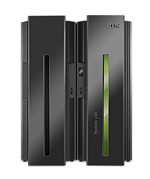 I'm making a summary of the announcement but I think the webcast of this evening (Europe) will give some more insight on some topics I'd like to talk about. So I'm waiting to post until after the webcast.
I'm making a summary of the announcement but I think the webcast of this evening (Europe) will give some more insight on some topics I'd like to talk about. So I'm waiting to post until after the webcast.
Subscribe to:
Posts (Atom)

